

Please Leave Us A Message
Privacy statement: Your privacy is very important to Us. Our company promises not to disclose your personal information to any external company with out your explicit permission.
 suzhou bangneng textile co.,ltd


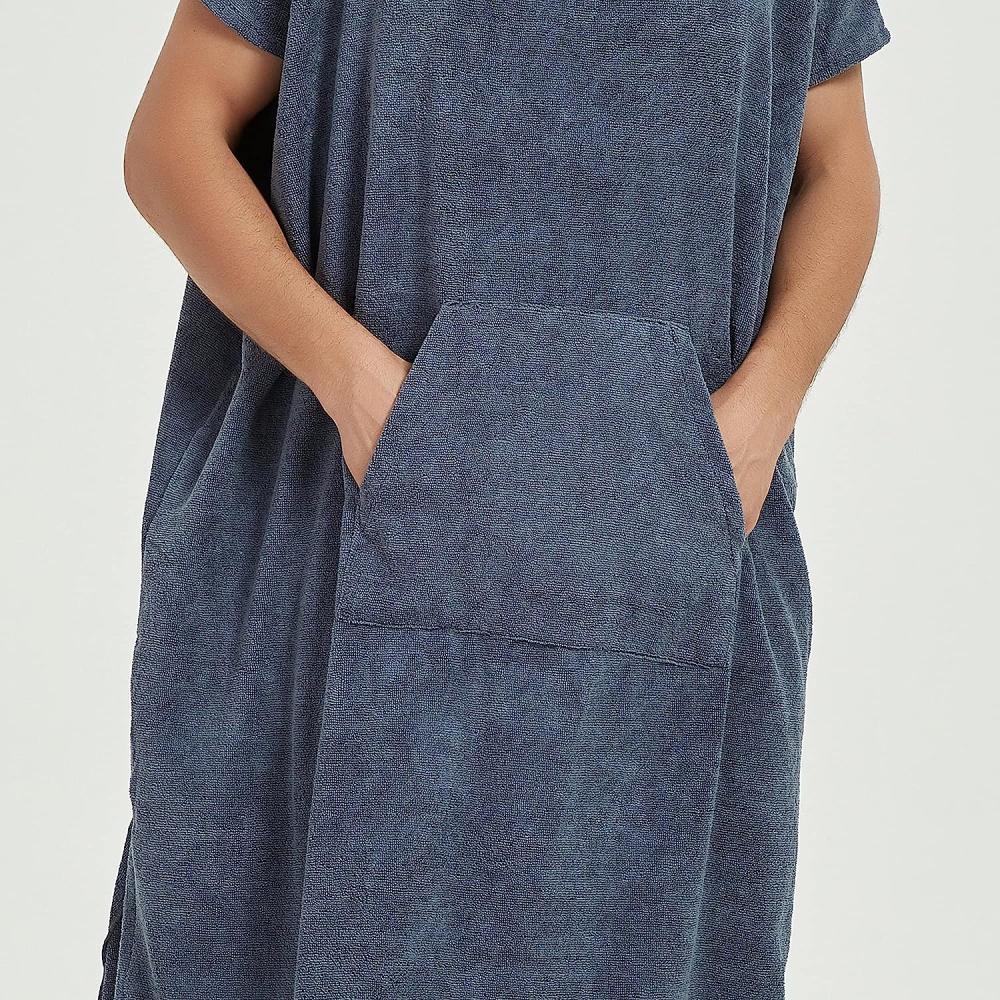
A microfiber poncho towel is a versatile, multi-functional travel accessory that combines the coverage of a poncho with the absorbent properties of high-quality microfiber fabric. Designed for active travelers, outdoor enthusiasts, and athletes, this innovative product serves as a towel, beach cover-up, windbreaker, or light rain shield — all in one lightweight garment.
Unlike traditional cotton towels, microfiber poncho towels are engineered with ultra-fine split fibers that create millions of tiny capillaries. These capillaries wick moisture away from the skin at an exceptional rate, allowing you to dry off quickly after swimming, surfing, or gym sessions. The poncho-style design provides full-body coverage while remaining compact enough to fold into a palm-sized pouch for effortless packing.
For procurement buyers sourcing custom microfiber poncho towels, this category offers significant advantages: lower shipping costs due to lightweight construction, higher perceived value through dual functionality, and broad appeal across multiple end-user segments including sports teams, travel brands, and promotional product distributors.
Suzhou Bangneng Textile Co., Ltd. has been a professional manufacturer of microfiber products since 2011, operating a complete production line from yarn knitting to final packing. This vertically integrated approach ensures consistent quality control at every stage of microfiber poncho towel manufacturing.
Equipped with advanced machinery imported from Germany, our facility maintains rigorous inspection protocols on every piece before delivery. This commitment to quality has earned strong market recognition across Western Europe, Northern Europe, and North America — regions with demanding compliance and quality standards.
Scalable production capacity ensures on-time delivery even for large orders. Whether you need standard inventory or urgent custom runs, we can fulfill standard orders within 30 days and expedite urgent requests in as fast as 15 days. This flexibility reduces your supply chain risk and supports just-in-time procurement strategies.

Selecting the right supplier for wholesale microfiber poncho towels requires evaluating several critical factors beyond price alone. Your choice directly impacts product quality, delivery reliability, and ultimately, customer satisfaction in your market.
Suppliers who control the entire process from yarn knitting to packing — like Suzhou Bangneng's complete production line — offer tighter quality control, faster turnaround times, and more competitive pricing. This vertical integration eliminates third-party dependencies that can cause delays and quality inconsistencies.
Not all microfiber is equal. Premium microfiber poncho towels use split-fiber technology with a high gram weight (typically 220-300 GSM) for superior absorbency and durability. Request GSM specifications, fiber composition details, and wash-fastness test results from potential suppliers before committing to bulk orders.
The ability to handle both standard 30-day deliveries and urgent 15-day rush orders is a key differentiator. Suppliers with 100+ tons monthly capacity, like Bangneng Textile, can scale production to meet seasonal demand spikes without compromising quality or missing deadlines.
A supplier with proven export experience to Western Europe, Northern Europe, and North America understands the quality expectations, labeling requirements, and compliance standards of these markets. This reduces the risk of customs delays, rejections, or customer complaints.
Look for suppliers offering reactive printing capabilities, custom sizing, logo embroidery, and private label packaging. These customization options enable you to build a differentiated product line that stands out in your target market and commands premium pricing.
Every piece should undergo rigorous pre-delivery inspection. Ask about their QC process, defect rate targets, and return policies. Suppliers with systematic inspection procedures significantly reduce your risk of receiving substandard inventory.
Use this comprehensive checklist to evaluate potential suppliers and ensure your microfiber poncho towel procurement meets quality, cost, and delivery expectations.
Confirm GSM weight range (220-300 GSM recommended for poncho towels)
Verify fiber composition (polyester/microfiber blend ratio)
Request absorbency test reports and drying speed data
Confirm available sizes and color options for your market
Verify minimum order quantity (MOQ) aligns with your volume needs
Confirm production lead time (standard vs. urgent)
Check export experience to your target region
Assess customization options (printing, packaging, branding)
Request pre-production samples for evaluation
Confirm in-process and pre-shipment inspection procedures
Verify compliance with destination market regulations
Clarify defect rate tolerance and replacement policy
Negotiate payment terms favorable to cash flow management
Confirm packaging standards for retail-ready or bulk shipping
Evaluate total landed cost including freight and duties
Establish clear communication channels and project timeline
Procurement buyers frequently encounter these challenges when importing custom microfiber poncho towels. Understanding these issues upfront helps you mitigate risks and avoid costly mistakes.
Low-quality microfiber may appear similar visually but fails to deliver adequate water absorption. Always request GSM specifications and conduct absorbency tests on pre-production samples before approving bulk orders.
Reactive printing used by reputable manufacturers ensures excellent color retention, but cheaper alternatives may fade or bleed after repeated washing. Verify color fastness ratings (minimum Grade 4) in your supplier's quality documentation.
Some suppliers quote aggressive timelines that cannot be met, causing missed launch dates. Work with manufacturers who have transparent production schedules and realistic capacity planning — such as those offering 15-30 day windows based on actual factory output.
Microfiber poncho towels are lightweight but can arrive wrinkled or contaminated if packaging is inadequate. Specify retail-ready packaging with protective polybags and clear labeling to maintain product presentation upon arrival.
Unit price alone doesn't reflect true cost. Factor in freight, import duties, customs clearance, and any additional compliance testing required by your market. A slightly higher unit price from a reliable supplier often results in a lower total landed cost.
Suppliers without in-house printing and sewing facilities may outsource these processes, introducing quality variability and longer lead times. Choose manufacturers with complete production lines for better control over customization quality and timing.
Based on industry benchmarks and buyer priorities, here is the ideal supplier profile for sourcing high-quality microfiber poncho towels at competitive prices with reliable delivery.
From yarn knitting to final packing — vertical integration eliminates third-party dependencies, ensuring consistent quality and faster turnaround for your microfiber poncho towel orders.
German-imported machinery enables precision manufacturing, tighter tolerances, and superior finish quality that meets the demands of Western European and North American markets.
Scalable production handles both small trial orders and large-volume seasonal runs without compromising quality or missing delivery commitments.
Standard 30-day fulfillment with expedited 15-day options for urgent orders, giving you the flexibility to respond to market demand changes.
Proven track record supplying Western Europe, Northern Europe, and North America means familiarity with international quality standards and compliance requirements.
Every piece inspected before delivery minimizes defect rates and protects your brand reputation. This systematic QC approach reduces your risk of receiving substandard inventory.
Get answers to the most common questions buyers ask when sourcing wholesale microfiber poncho towels for their business.
For poncho-style towels, a GSM weight between 220-300 is recommended. Lower GSM (under 200) may feel too thin and lack sufficient absorbency, while higher GSM (over 300) adds unnecessary weight and bulk. The optimal range balances portability with performance, ensuring customers receive a product that feels substantial yet remains packable.
Reactive printing is the preferred method for microfiber fabrics because it creates chemical bonds between the dye and fiber, resulting in superior color fastness and vibrancy. Unlike screen printing or heat transfer, reactive prints won't crack, peel, or fade significantly after repeated washing — making them ideal for products that will be washed frequently by end users.
Minimum order quantities vary by supplier and customization level. For standard designs, MOQs typically range from 500-1,000 pieces. Custom colors, prints, or packaging may require higher MOQs of 1,000-3,000 pieces to justify setup costs. Discuss your volume requirements upfront to find a supplier whose MOQ aligns with your business model.
Yes, microfiber poncho towels are increasingly popular as premium promotional items. Their dual functionality (towel + cover-up), lightweight nature, and quick-drying properties make them highly valued by recipients compared to standard cotton towels. They also ship more efficiently, reducing your logistics costs per unit delivered.
Request specific metrics: monthly tonnage capacity, number of production lines, and current utilization rate. Ask for references from recent large orders in your region. Suppliers like Suzhou Bangneng Textile, with 100+ tons monthly capacity and German equipment, provide verifiable capacity data that supports large-volume commitments.
Common packaging options include individual polybags with printed labels, hang tags with product information, retail boxes for premium positioning, and bulk cartons for warehouse distribution. Many suppliers offer custom packaging design services to match your brand identity. Specify your packaging requirements during the quoting phase to ensure accurate pricing.
Tel: 86-13584486170
Whatsapp: +86 13584486170
Address: NO511, changfu street, changshu, jiangsu province, Suzhou, Jiangsu China
Website: https://www.bangnengtowel.com
Privacy statement: Your privacy is very important to Us. Our company promises not to disclose your personal information to any external company with out your explicit permission.
Fill in more information so that we can get in touch with you faster
Privacy statement: Your privacy is very important to Us. Our company promises not to disclose your personal information to any external company with out your explicit permission.